Examinations have expanded beyond physical centres, but expectations around integrity, accountability, and control remain unchanged.
For government bodies, universities, and public examination authorities, remote delivery introduces a clear requirement. Every candidate interaction must be monitored, every process must be auditable, and every outcome must be defensible.
This is where remote proctoring operates not as a standalone tool, but as part of a larger examination infrastructure.
What are Remote Proctored Examinations?
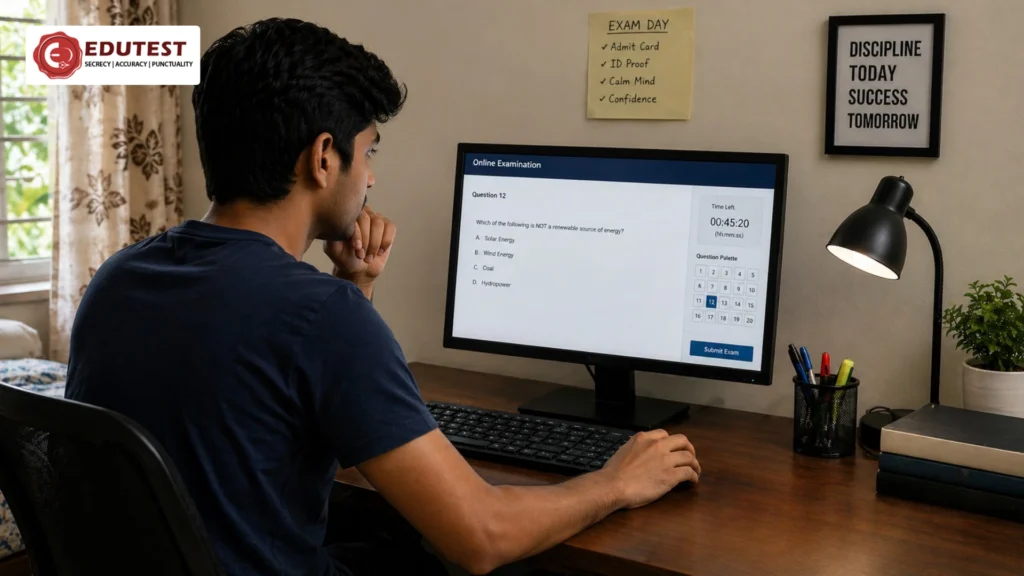
A remote proctored exam allows candidates to take assessments from any location while being monitored through a combination of technology and human oversight.
This monitoring is structured and layered:
- AI proctoring solutions track behavioural patterns
- Audio and video streams enable continuous supervision
- Secure environments restrict unauthorized access
- Identity verification ensures candidate authenticity
The objective is to maintain exam integrity across distributed environments.
As seen in Edutest solutions, remote proctoring is designed to ensure authenticity regardless of location, using advanced monitoring systems and AI-driven detection to prevent misconduct.
Integrity alone does not guarantee smooth execution.
Why User Experience Matters in Remote Exam Environments
Security without usability introduces friction. And friction impacts execution.
In a remote exam platform, unclear flows or complex interfaces can lead to:
- Increased support interventions during live exams
- Delays in candidate onboarding
- Process disruptions at scale
- Higher administrative overhead
For institutions, this affects reliability.
A user friendly exam interface is therefore not a design choice. It is an operational requirement.
Clear instructions, guided steps, and predictable navigation ensure candidates engage with the remote assessment tools, not the system.
This is where system design becomes critical.
How Edutest Designs a Remotely Proctored Exam Experience
A remotely proctored exam is a sequence of controlled interactions. Edutest designs this as a process-led system.
1. Pre-Exam Validation
Candidates are verified before entry:
- Device and network compatibility checks
- Camera and microphone validation
- Face-based identity authentication
- Environment readiness checks
This reduces entry-stage failures.
2. Controlled Exam Environment
Once inside, the system enforces strict controls:
- Forced full-screen mode to maintain focus
- Blocking of screen sharing tools
- Detection of external monitors and virtual machines
- Secure browser environment
The interface remains simple, while controls operate in the background.
3. Continuous Monitoring and Intervention
Monitoring combines automation with oversight:
- AI-based flagging of suspicious behaviour
- Audio and video recording for traceability
- Detection of mobile devices, voice anomalies, and movement
- Flexible options for live or automated proctoring
This ensures online exam security is maintained without relying on a single layer.
4. Post-Exam Audit Framework
After completion, systems support review and accountability:
- Detailed activity logs
- Flagged incident analysis
- Complete audit trails for governance requirements
This allows institutions to validate outcomes with confidence.
Reducing Candidate Stress Through Guided Exam Flows with Edutest Systems
A remotely proctored exam environment must guide candidates clearly at every stage.
Edutest remote proctoring systems are structured to reduce ambiguity:
- Instructions are embedded within the flow
- Step transitions are controlled and sequential
- Alerts are contextual and minimal
- System responses are immediate and clear
This reduces candidate-side errors during a remotely proctored exam.
From an operational perspective, fewer errors translate into fewer disruptions. This supports smoother execution, especially in large-scale assessments.
Closing Perspective
Remote proctoring has become an important component of modern examination delivery. Its effectiveness depends on how well systems balance control with usability.
Edutest solutions approach this with infrastructure thinking. Security is layered, processes are structured, and interfaces are simplified.
The outcome is a remote exam platform that supports integrity without compromising execution reliability.
In governance-driven environments, that balance defines the success of any assessment system.
Remote proctored exams are online tests conducted with live or AI-based monitoring to ensure candidates follow rules and prevent cheating from any location.
EduTest designs simple interfaces, easy login processes, clear instructions, and minimal technical requirements to ensure a smooth experience for candidates.
EduTest uses AI proctoring, live monitoring, identity verification, browser lockdown, and data encryption to maintain exam integrity and prevent malpractice.