As assessment ecosystems become more distributed, institutions are under increasing pressure to balance accessibility with examination integrity. Universities, government recruitment bodies, certification authorities, and public examination systems must often accommodate candidates across multiple locations while maintaining the same standards of security, accountability, and fairness expected from any examination process.
Remote proctoring has emerged as one of the delivery models helping institutions address this challenge. Its value is not simply that candidates can take examinations from different locations. The real value lies in maintaining oversight, traceability, and governance controls when assessments are conducted outside a traditional test centre environment.
What Are Remote Proctored Exams?
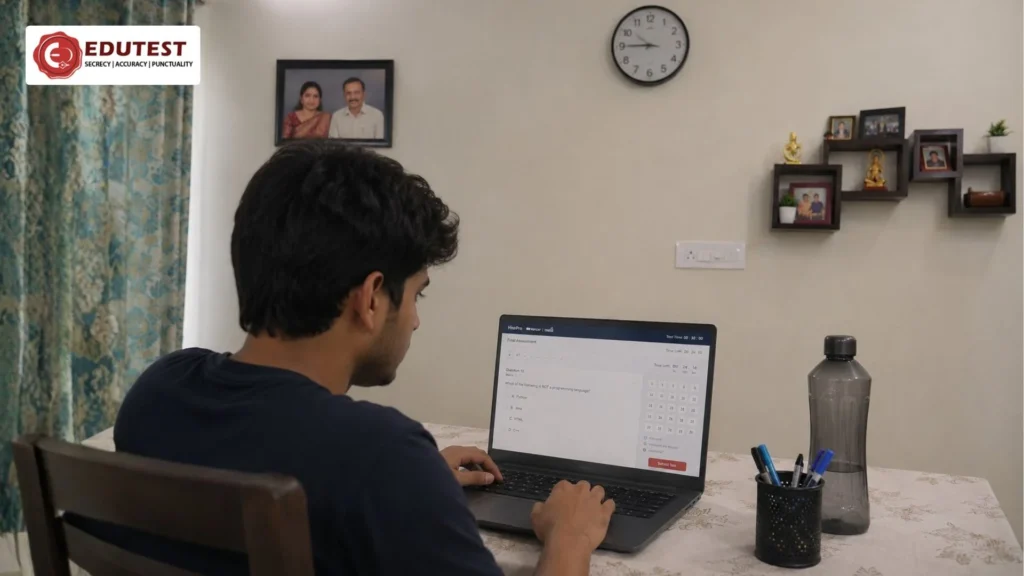
A remote proctored exam is an assessment conducted online under monitored conditions. Candidates complete the examination from an approved location while proctoring systems and trained personnel oversee the examination process remotely.
A remote proctored examination typically includes a combination of:
- Candidate identity verification
- Examination environment checks
- Live or recorded monitoring
- Activity tracking and incident flagging
- Audit logs and review mechanisms
The objective is not to replicate a physical examination centre. It is to ensure that examination rules, candidate verification processes, and monitoring standards remain consistent regardless of where the assessment is delivered.
For institutions managing high-stakes assessments, this consistency is often as important as the technology itself.
Key Benefits of a Remotely Proctored Exam in Digital Assessments
As digital assessment programs mature, institutions are evaluating examination models based on operational outcomes rather than convenience alone.
A well-implemented remote proctored test can support:
- Wider candidate accessibility across geographies
- Faster deployment of assessment programs
- Standardized monitoring processes
- Reduced logistical complexity for specific examination requirements
- Better examination traceability and audit readiness
- Greater flexibility within broader assessment strategies
Importantly, remote proctoring is not a replacement for every examination format. Different assessment objectives require different delivery models. Centre-based examinations, computer-based testing environments, and remote assessments each serve specific operational needs.
From our experience, institutions achieve better outcomes when remote proctoring is viewed as one component of a larger examination framework rather than a standalone technology solution.
The next consideration is whether these assessments can maintain the level of security expected in governance-driven examination environments.
How Remote Proctoring Enhances Exam Security and Integrity
Security remains one of the primary reasons institutions adopt remote proctoring solutions.
A remote online proctored exam introduces multiple layers of examination control before, during, and after the assessment process. These controls may include:
- Identity authentication procedures
- Candidate environment validation
- Continuous monitoring during the examination
- Incident detection and escalation workflows
- Session recording and evidence retention
- Post-examination review processes
In practice, examination integrity depends on more than monitoring technology. The effectiveness of a secure exam remote proctor model is determined by the combination of technology, operational controls, trained personnel, and clearly defined procedures.
We have observed that institutions often focus first on monitoring features. However, long-term examination integrity is usually strengthened by governance frameworks, auditability, and process consistency across the entire assessment lifecycle.
This focus on accountability is influencing how institutions evaluate modern assessment infrastructure.
Why Institutions Are Adopting Remotely Proctored Exams
The adoption of remotely proctored exam models is being driven by both operational and governance requirements.
Institutions are increasingly looking for assessment approaches that can support scale while maintaining examination controls. This is particularly relevant for organizations managing geographically dispersed candidates, recurring assessments, professional certifications, and large recruitment programs.
A remote proctored test can help institutions:
- Extend assessment reach without compromising oversight
- Maintain standardized examination processes
- Support business continuity and scheduling flexibility
- Strengthen examination documentation and audit readiness
- Improve visibility into assessment operations
The growing adoption of secure remote exams reflects a broader shift in the assessment industry. Decision-makers are no longer evaluating digital assessments solely on accessibility. They are evaluating whether examination systems can demonstrate accountability, transparency, and operational reliability at scale.
That expectation places greater importance on the examination partner responsible for delivery.
How EduTest Delivers Secure and Scalable Remote Proctoring Solutions
At EduTest, remote proctoring is delivered within a structured examination management framework designed for governance-heavy assessment environments.
Our approach combines technology, operational oversight, and process-led execution to support secure examination delivery across varied assessment scenarios.
EduTest remotely proctored exams incorporate:
- Candidate authentication and verification workflows
- Virtual exam proctoring capabilities
- Command centre monitoring and supervision
- Structured escalation and incident management processes
- Trained manpower deployment
- Comprehensive audit trails and reporting
- Integration with a secure online examination system
As an examination infrastructure and execution partner, we view remote proctoring as part of a broader assessment ecosystem. Successful examination delivery depends not only on monitoring capabilities but also on operational discipline, governance alignment, and accountability throughout the examination cycle.
Whether supporting an online remote proctored examination, large-scale recruitment assessments, university examinations, or other digital assessment solutions, the objective remains consistent: delivering secure, transparent, and scalable assessment experiences that institutions can trust.
As assessment models continue to evolve, remote proctoring will remain an important option within the broader examination landscape. For institutions, the priority is not choosing the newest delivery model. It is selecting the right examination approach while maintaining integrity, compliance, and operational control at every stage.
Remotely proctored exams enable secure online testing with AI monitoring, identity verification, and real-time supervision.
They strengthen exam integrity through continuous monitoring, candidate authentication, and real-time detection of suspicious activities.
They provide flexible, secure, and scalable online assessments while reducing the need for physical test centers.