
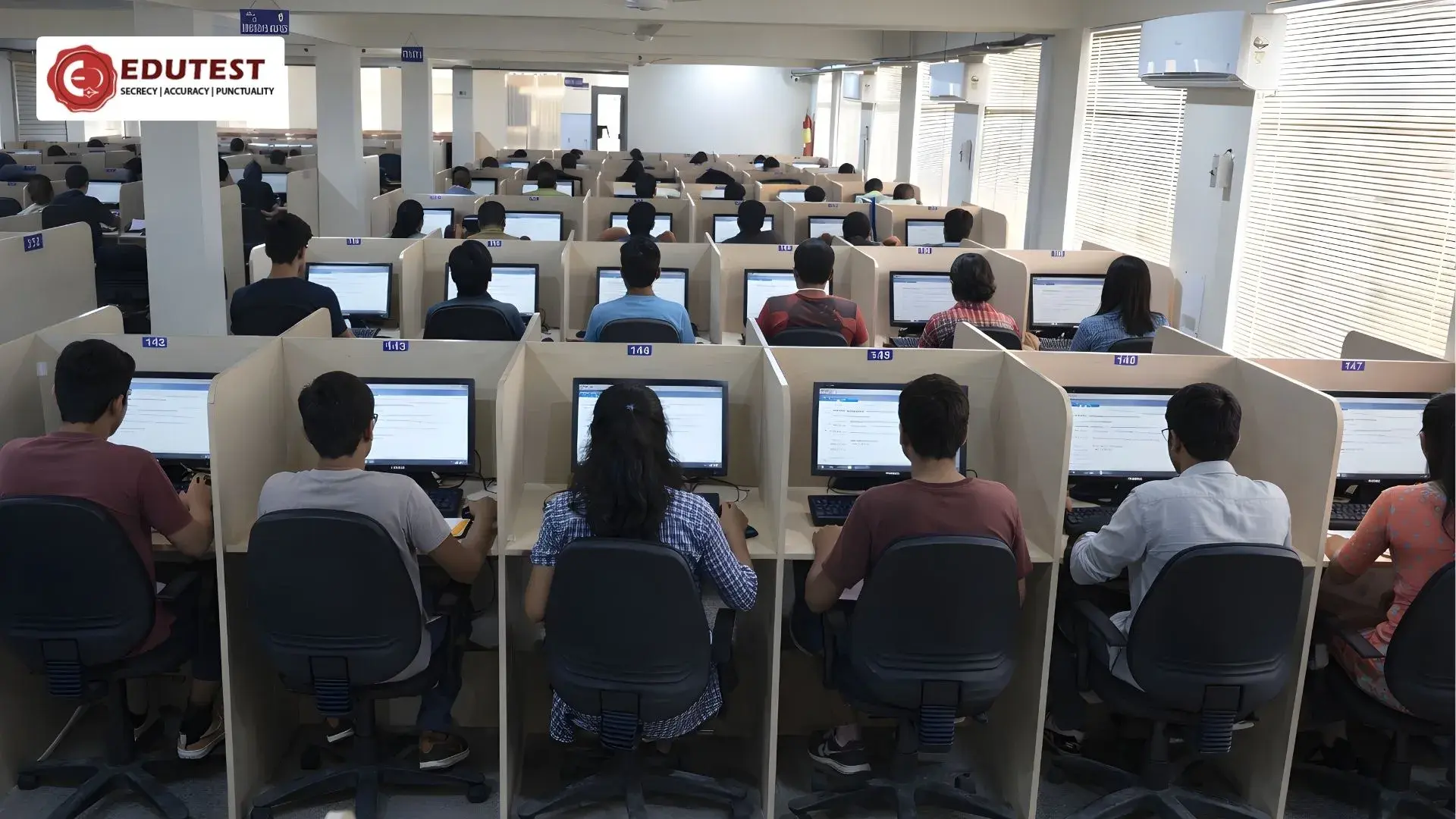
Higher education exams are at the nexus of public accountability, policy, and technology; therefore, a single incident could impact tens of thousands of people’s careers, delay decisions by institutions, and open the institution up to legal liability. The issue is far more than administrative in nature; it is systemic in nature.
When the assessment infrastructure is large enough to include tens of thousands of students, the planning must evolve from simple event management to an engineered system of control.
This guide describes how institutions develop, secure, and implement large scale university exams through structured systems and governed workflows, and the resilience of their infrastructure.
What are Large Scale University Exams?
Large-scale university exams are assessments conducted across thousands of candidates, locations, and administrative environments simultaneously. At this level, the examination moves beyond an academic activity and becomes an operational exercise where fairness and continuity must hold under pressure.
Unlike department-level tests, these exams function at scale and typically involve:
- Multi-location execution across campuses or remote environments
- High candidate concurrency during defined exam windows
- Coordination across administrative, academic, and technical teams
The impact of failure is also different. A delay or disruption does not affect a single cohort. It can:
- Influence thousands of candidates at once
- Disrupt institutional timelines and decision cycles
- Escalate into reputational and compliance risks
Because of this scale, large university exams require structured planning and coordinated execution rather than isolated academic administration.
What Institutes Must Align Before Conducting Exams
Every institution begins with one question: how to conduct university exams at scale without compromising fairness or continuity. The answer sits in requirements mapping.
Assessment systems must align with:
- Regulatory frameworks and accreditation norms
- Institutional policies and evaluation models
- Candidate diversity across regions and devices
- Data governance and privacy mandates
In higher education exam management, early failure usually occurs when processes are defined without system-level thinking. For example, manual registration workflows collapse when candidate volumes exceed verification capacity. Question paper workflows fail when access controls are informal.
Technology is not typically the sole cause of examination disruption per benchmarking in the industry; rather, operational risks are typically due to governance gaps, fragmented responsibilities, and poor process design.
Exam Infrastructure and Technical Planning
Infrastructure planning defines whether an exam survives peak load or fails publicly. Large-scale exam planning must treat assessment as a mission-critical digital operation.
Core components include:
- Redundant server architecture
- Secure data centers and encrypted transmission
- Device compatibility frameworks
- Identity verification mechanisms
A modern university exam management system integrates candidate data, scheduling, content distribution, and monitoring into one governed environment. Systems must log every access event and administrative action for traceability.
When infrastructure is treated as temporary or outsourced without governance controls, failures appear during peak concurrency. This is where reputational damage begins.
Choosing the Right Online Exam Platform
Institutions increasingly rely on digital exam solutions for universities that support remote participation, hybrid models, and multi-location deployments. Platform selection should focus on controls, not features.
Key evaluation parameters:
- Role-based access architecture
- Encryption standards for question delivery
- Audit logs and compliance readiness
- Failover and redundancy capability
A credible university assessment platform should allow administrators to simulate peak scenarios and validate performance before deployment. Stress testing is not optional. It is a governance requirement.
Candidate Registration and Data Management Process
Candidate data becomes the backbone of the bulk student exam process. Errors at this stage cascade into scheduling conflicts, identity mismatches, and evaluation disputes.
Critical controls include:
- Identity verification workflows
- Automated duplicate detection
- Centralized document validation
- Secure storage and access governance
Centralized university testing models are reported to have increased traceability and decreased overhead for administration. The centralization of a university’s tests provides consistency among the different departments in their processes, auditability of processes, and a standardized process for conducting tests.
Exam Scheduling for Thousands of Students
Scheduling is not a calendar exercise. It is a capacity management problem.
The online university exam process must account for:
- Time-zone distribution
- Network variability
- Device availability
- Concurrent candidate thresholds
Institutions increasingly use predictive scheduling algorithms to distribute load. This prevents peak-hour overload and reduces dropout rates.
A structured university exam execution guide often includes contingency windows, buffer sessions, and alternate access protocols. These safeguards prevent disruptions from escalating into systemic failures.
Question Paper Creation and Secure Content Delivery
Question security determines exam credibility. Content leaks, unauthorized access, and early exposure create legal and reputational consequences.
Secure delivery frameworks include:
- Encrypted question banks
- Multi-stage access authorization
- Time-locked content release
- Activity monitoring
Content creation, approval, and distribution must be separated as their activities serve different purposes. By separating roles, a system reduces the chances of insider risk, while audit trails will assist in identifying irregularities should a breach occur.
The Role of Examination Management Services in Infrastructure Governance
Institutions are increasingly implementing Examination Management Services into their infrastructure and operational architecture to create uniformity in control over examination management across their departments. These systems provide support for compliance frameworks, audit, and operational readiness.
Governance layers, as described above, generally include:
- Multi-layer approval workflows
- Real time monitoring dashboards
- Incident response procedures and processes
- Regulatory reporting modules
Centralised governance of infrastructure will result in risk exposure being reduced. Conversely, fragmented operations create discrepancies and responsibilities that result in a lack of accountability.
Online Proctoring and Anti-Cheating Methods
Integrity is built through the layering of controls. Remote assessments require methods for the verification of identity, monitoring of behaviour, and detection of misconduct.
Modern systems use:
- AI-assisted behavioral flags
- Browser lockdown environments
- Biometric authentication options
- Session recording for audit review
Regulatory authorities are demanding traceable or reviewable proctored test data. Institutions with formal control reporting processes have experienced less pre-decision challenge and higher acceptance of the decisions.
The introduction of remote assessment on a global scale has accelerated the demand for exam applications that can efficiently manage thousands of simultaneous testing sessions with real-time monitoring.
Server Load and Scalability Planning
System resilience depends on concurrency planning. Institutions often underestimate the technical load created during peak exam windows.
Effective strategies include:
- Distributed server architecture
- Auto-scaling infrastructure
- Load balancing across regions
- Disaster recovery environments
Industry reports indicate that peak concurrent exam traffic can multiply baseline usage by 8–12 times. Log in failures typically occur due to unforeseen system spikes across multiple users and create an immediate high level of candidate dissatisfaction.
The approach of scalability planning will allow for uninterrupted testing as customer demand increases while continuing to meet performance and security requirements.
Continuous Real-time Monitoring and Support of Candidate Testing
Real-time monitoring is the operational nerve center of the exam cycle.
Monitoring frameworks track:
- Candidate login patterns
- Network disruptions
- Suspicious behavioral triggers
- Server performance metrics
Operational teams must respond within minutes, not hours. Rapid intervention prevents minor disruptions from turning into system-wide failures.
Institutions increasingly build dedicated command centers during high-stakes examinations. These centers coordinate technical, administrative, and proctoring responses in real time.
Result Processing, Evaluation, and Reporting Automation
Post-exam processes define institutional credibility. Manual evaluation delays results and introduces inconsistencies.
Automated workflows enable:
- Digital evaluation frameworks
- Standardized scoring systems
- Statistical moderation tools
- Transparent reporting dashboards
In examination management services, automation ensures traceability from candidate submission to final score release. All actions are tracked and can be viewed.
Emerging trends with encrypted result pipes, AI-tracking verification, and auditable reporting that meet regulatory guidelines.
Emerging Trends in Assessment Infrastructure
Assessment systems are becoming less of an admin tool and more of a strategic infrastructure.
Important Sector Trends:
- Increased adoption of encrypted cloud architectures
- Behavioral analytics for academic integrity
- Real-time identity validation technologies
- Integration with institutional ERP and governance systems
Cybersecurity frameworks are becoming central to exam planning. Currently, assessment data is treated by institutions as a high value asset with strict security and audit trail requirements.
Educational regulators around the world are providing a common set of standardized digital controls to ensure that there is fairness and traceability in all types of high stakes assessments.
Strategic Vision
University assessments have a significant impact on student admission, career pathways, and institutional reputation. If the assessment systems fail, they have consequences that go well beyond operational failure. Public trust is diminished. Legal exposure increases. Academic integrity is called into question.
Institutions that view assessments as purpose-built infrastructures will see a major difference in performance. They will implement governance processes within a workflow model and build audit-ready systems as part of a friction-free digital environment. They will also utilize their Examination Management Services (EMS) not only for operational purposes but also as a structural foundation to support their academic ecosystem.
The future of university assessment will see institutions creating and using systems with disciplined system design, governance maturity, and the ability to plan for continued scalability. As the number of candidates increases and assessment formats continue to evolve, infrastructure decisions will dictate how well institutions will protect fairness, accountability, and public confidence.
Frequently asked questions
Clear communication is critical for smooth execution. Universities must inform students about exam schedules, guidelines, permitted materials, and reporting times well in advance. Communication with invigilators and administrative staff ensures role clarity. Email notifications, SMS alerts, and official portals are effective channels for updates.
To streamline evaluation, universities can adopt digital evaluation systems, OMR scanning, automated grading tools, and centralized result processing software. Double evaluation methods and moderation policies ensure fairness and accuracy. Publishing results through secure online portals improves transparency and accessibility.
Logistics planning includes selecting appropriate exam centers, arranging seating plans, assigning invigilators, ensuring adequate infrastructure (electricity, internet, backup systems), and preparing contingency plans. Clear communication with staff and students, proper time scheduling, and emergency response planning are essential to avoid disruptions.